




In today’s connected world, free Wi-Fi feels like a blessing. Whether you’re at a coffee shop, airport, hotel, or shopping mall, public networks promise convenience — a chance to check emails, stream, or catch up on work without burning through mobile data.
But beneath this convenience lies a growing security threat that most people ignore. Free Wi-Fi isn’t just free — it often comes at the cost of your privacy and data security. Let’s explore the hidden dangers.
When we see “Free Wi-Fi,” many of us assume it’s safe simply because a trusted location (like a café or airport) provides it. But here’s the truth:
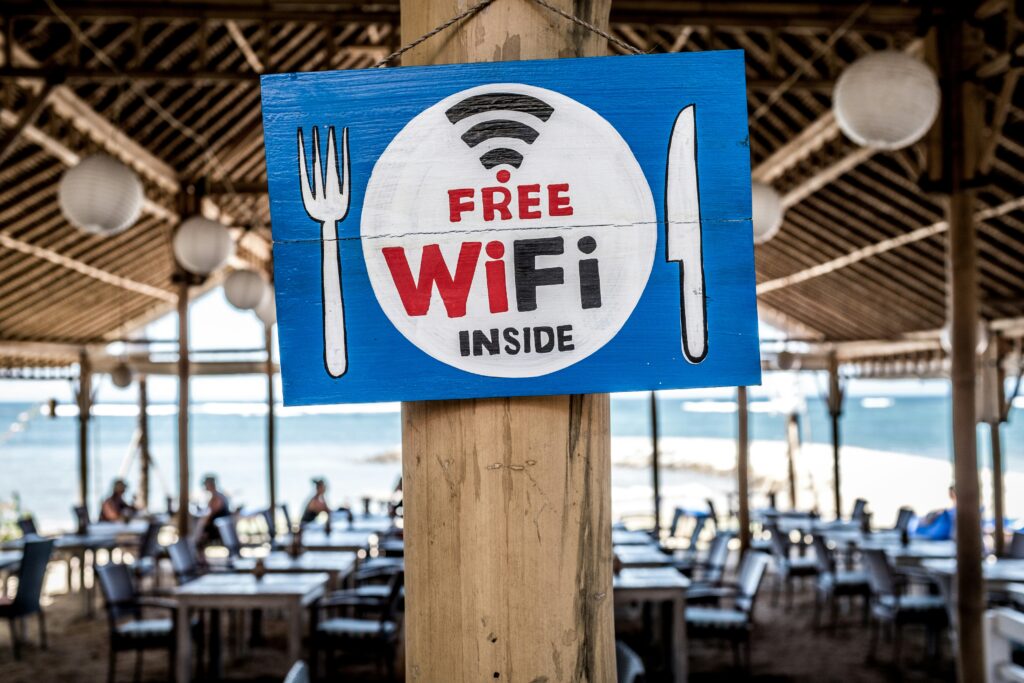
- Public networks are often unsecured.
- Anyone on the same network can potentially monitor your activity.
- Hackers set up fake hotspots with names like “Free\_Airport\_WiFi” to trick users.
That “safe” network could be a trap.
One of the most common risks is a Man-in-the-Middle (MITM) attack. In simple terms, a hacker positions themselves between you and the Wi-Fi router. Every piece of data you send — passwords, credit card details, personal messages — passes through them first.
This means:
- Logging into your bank account on free Wi-Fi could expose your credentials.
- Shopping online could hand over your card details.
- Even private emails can be intercepted.
Have you ever clicked “Accept” before using free Wi-Fi? Those terms and conditions often allow providers to collect your data.
Examples include:
- Tracking browsing behavior.
- Collecting personal details (like email addresses).
- Selling data to advertisers.
So while hackers are one threat, sometimes the provider itself profits from your privacy.
Hackers can steal your active login sessions. For instance:
- If you log into Facebook on free Wi-Fi, they can “hijack” your session and gain access to your account.
- Even if you don’t type your password, they can piggyback on your active connection.
Some attackers exploit free Wi-Fi to inject malware into your device. This can happen through:

- Fake pop-ups requesting “updates.”
- Redirects to malicious websites.
- Downloading files that look safe but contain spyware.
Once malware enters your device, it can track keystrokes, steal files, and even access your camera or microphone.
Free Wi-Fi isn’t just about internet access — it’s also about data collection.
Businesses often track:
- How long you stay connected.
- Which sites you visit.
- Your location within a store or building.
This helps them build consumer profiles and push targeted ads — often without your knowledge.
How to Protect Yourself on Free Wi-Fi
While the dangers are real, you don’t have to avoid public Wi-Fi entirely. Here are smart safety tips:

- Use a VPN: A good VPN encrypts your traffic, making it unreadable to hackers.
- Turn Off File Sharing: This prevents others from accessing your files.
- Stick to HTTPS Websites: Look for the padlock icon in your browser.
- Avoid Sensitive Transactions: Don’t bank or shop on public Wi-Fi.
- Forget Networks After Use: Prevents auto-connection in the future.
- Use Mobile Data for Security: For critical tasks, your data plan is safer.
Conclusion
Free Wi-Fi is convenient, but it’s not free from risks. Every time you connect without protection, you gamble with your privacy and personal data. The good news is that awareness and simple tools like VPNs can shield you from most threats.
So next time you sip coffee at your favorite café and see that tempting “Free Wi-Fi” sign, remember: sometimes the cost of convenience is your digital security.
